
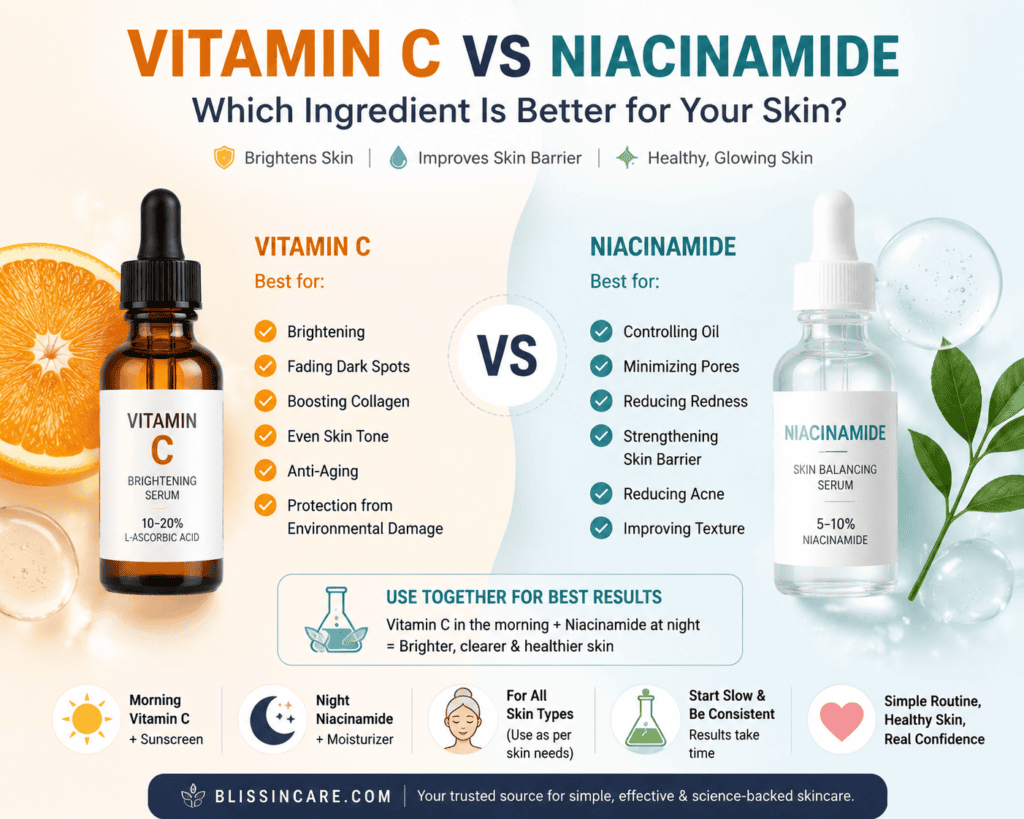
If you want healthy, glowing skin, you have probably heard about Vitamin C and Niacinamide. Both ingredients are popular in modern skincare. Both offer amazing benefits. But many people still ask one question: Vitamin C vs Niacinamide: Which ingredient is better for your skin?
The answer depends on your skin type, concerns, and skincare goals. In this complete guide, you will learn the benefits, differences, side effects, and how to choose the right ingredient.
At Blissincare.com, we believe skincare should be simple, effective, and backed by science. Our goal is to help you understand skincare ingredients so you can build a routine that truly works for your skin. Whether you are a beginner or a skincare lover, this guide will help you make a better choice.
Table of Contents
- What Is Vitamin C?
- What Is Niacinamide?
- Benefits of Vitamin C
- Benefits of Niacinamide
- Vitamin C vs Niacinamide: Key Differences
- Which Ingredient Is Better for Different Skin Types?
- Vitamin C vs Niacinamide for Acne
- Vitamin C vs Niacinamide for Dark Spots
- Vitamin C vs Niacinamide for Anti-Aging
- Can You Use Vitamin C and Niacinamide Together?
- How to Layer Them Correctly
- Common Mistakes to Avoid
- Side Effects
- How to Choose the Right Product
- Frequently Asked Questions
- Final Verdict
What Is Vitamin C?
Vitamin C is one of the most popular skincare ingredients. It is a powerful antioxidant that protects your skin from damage caused by pollution, UV rays, and free radicals.
Vitamin C also helps your skin produce collagen. Collagen keeps your skin firm, smooth, and youthful.
Many skincare products contain Vitamin C in different forms. The most effective form is L-Ascorbic Acid, but there are also gentler forms like Sodium Ascorbyl Phosphate and Magnesium Ascorbyl Phosphate.
Main Benefits of Vitamin C
- Brightens dull skin
- Reduces dark spots
- Fades acne marks
- Improves skin tone
- Boosts collagen production
- Protects against environmental damage
- Reduces signs of aging
What Is Niacinamide?
Niacinamide is a form of Vitamin B3. It is one of the most gentle skincare ingredients available today.
Unlike Vitamin C, Niacinamide focuses more on improving the skin barrier and balancing oil production.
It works well for almost every skin type.
Main Benefits of Niacinamide
- Controls excess oil
- Strengthens the skin barrier
- Reduces redness
- Minimizes pores
- Improves uneven skin tone
- Fades acne marks
- Keeps skin hydrated
Benefits of Vitamin C
1. Brightens Skin
Vitamin C reduces dullness and gives your skin a healthy glow.
People with tired-looking skin often notice brighter skin after regular use.
2. Fades Hyperpigmentation
Dark spots appear because of excess melanin production.
Vitamin C slows down melanin production and helps fade pigmentation over time.
3. Boosts Collagen Production
Collagen keeps skin firm and elastic.
As we age, collagen production slows down.
Vitamin C supports collagen formation and reduces wrinkles.
4. Protects Against Free Radicals
Sunlight, pollution, and smoke create free radicals.
These damage skin cells.
Vitamin C acts like a shield against this damage.
5. Improves Skin Texture
Regular use makes skin smoother and softer.
Fine lines also become less visible.
Benefits of Niacinamide
1. Controls Oil Production
If you have oily skin, Niacinamide can reduce excess sebum.
This lowers the chances of clogged pores.
2. Strengthens the Skin Barrier
Your skin barrier protects against moisture loss.
Niacinamide repairs and strengthens this barrier.
Healthy skin stays hydrated longer.
3. Reduces Acne
Niacinamide calms inflammation.
It reduces redness and swelling around pimples.
4. Minimizes Large Pores
Large pores become less noticeable when oil production is balanced.
Niacinamide helps improve pore appearance.
5. Reduces Redness
Sensitive skin often reacts to weather or skincare products.
Niacinamide helps calm irritated skin.
6. Improves Skin Tone
It reduces uneven skin tone and post-acne marks.
Vitamin C vs Niacinamide: Key Differences
| Feature | Vitamin C | Niacinamide |
|---|---|---|
| Brightens Skin | Excellent | Very Good |
| Controls Oil | No | Excellent |
| Reduces Acne | Moderate | Excellent |
| Fades Pigmentation | Excellent | Good |
| Improves Skin Barrier | Moderate | Excellent |
| Anti-Aging | Excellent | Very Good |
| Suitable for Sensitive Skin | Sometimes | Excellent |
| Hydration | Moderate | Excellent |
| Reduces Redness | Moderate | Excellent |
| Daily Use | Yes | Yes |
Vitamin C vs Niacinamide for Different Skin Types
Oily Skin
Winner: Niacinamide
It reduces oil production and prevents clogged pores.
Dry Skin
Winner: Niacinamide
It strengthens the skin barrier and locks in moisture.
Combination Skin
Winner: Both (Vitamin C vs Niacinamide)
Vitamin C brightens.
Niacinamide balances oil.
Together they work well.
Sensitive Skin
Winner: Niacinamide
Vitamin C may cause irritation in some people.
Niacinamide is much gentler.
Mature Skin
Winner: Vitamin C
Its collagen-boosting properties help reduce wrinkles and improve firmness.
Vitamin C vs Niacinamide for Acne
Many people think Vitamin C treats acne directly.
It actually works better after acne heals because it fades acne marks.
Niacinamide helps during active breakouts.
It reduces redness, controls oil, and calms inflammation.
Winner for Acne
Niacinamide
Vitamin C vs Niacinamide for Dark Spots
Vitamin C directly reduces melanin production.
This makes it highly effective for pigmentation.
Niacinamide also helps but usually takes longer.
Winner
Vitamin C
Vitamin C vs Niacinamide for Anti-Aging
Both ingredients (Vitamin C vs Niacinamide) reduce signs of aging.
Vitamin C increases collagen production.
Niacinamide improves elasticity and hydration.
The best results often come from using both.
Can You Use Vitamin C and Niacinamide Together?
Yes.
This is one of the biggest myths in skincare.
Older studies suggested they should not be mixed.
Modern research has shown that they work well together in most skincare routines.
Many skincare brands now combine both ingredients in one product.
Together they can:
- Brighten skin
- Improve hydration
- Reduce wrinkles
- Fade dark spots
- Strengthen the skin barrier
- Improve overall skin health
How to Layer Vitamin C and Niacinamide
You have several options.
Option 1
Morning
- Cleanser
- Vitamin C Serum
- Moisturizer
- Sunscreen
Night
- Cleanser
- Niacinamide Serum
- Moisturizer
Option 2
Morning
- Cleanser
- Vitamin C
- Niacinamide
- Moisturizer
- Sunscreen
Option 3
Alternate Days
Day 1
Vitamin C
Day 2
Niacinamide
This works well for beginners.
Which Ingredient Should You Choose?
Choose Vitamin C if you want to:
- Brighten dull skin
- Reduce pigmentation
- Fade sun spots
- Fight aging
- Improve skin glow
Choose Niacinamide if you want to:
- Control oily skin
- Reduce acne
- Minimize pores
- Strengthen your skin barrier
- Reduce redness
Choose both if you want complete skincare benefits.
Common Mistakes to Avoid
Skipping Sunscreen
Vitamin C works best when you wear sunscreen daily.
Without sunscreen, new pigmentation may appear.
Using Too Many Products
Avoid layering many active ingredients at once.
Keep your routine simple.
Choosing High Concentrations Too Soon
Start with lower strengths.
Increase gradually.
Expecting Instant Results
Healthy skin takes time.
Most people see visible improvement after 6–12 weeks of regular use.
Ignoring Patch Testing
Always test a new product on a small area before applying it to your whole face.
Side Effects
Vitamin C
Possible side effects include:
- Mild irritation
- Dryness
- Tingling
- Redness
These usually happen with stronger formulas.
Niacinamide
Possible side effects include:
- Mild irritation
- Temporary redness
Most people tolerate Niacinamide very well.
How to Choose the Right Vitamin C Product
Look for:
- Stable packaging
- Dark bottle
- 10–20% concentration
- Fresh formula
- Trusted skincare brand
Store it away from sunlight.
How to Choose the Right Niacinamide Product
Choose products with:
- 5–10% Niacinamide
- Fragrance-free formula
- Hydrating ingredients
- Trusted manufacturer
Higher percentages are not always better.
Sample Skincare Routine
Morning
- Gentle Cleanser
- Vitamin C Serum
- Moisturizer
- Sunscreen SPF 30 or higher
Evening
- Cleanser
- Niacinamide Serum
- Moisturizer
Who Should Avoid Vitamin C?
You may need to introduce Vitamin C slowly if you have:
- Very sensitive skin
- Active eczema
- Damaged skin barrier
Start with a lower concentration and use it every other day.
Who Should Avoid Niacinamide?
Most people can safely use Niacinamide.
If you notice irritation, reduce the frequency or switch to a lower concentration.
Tips for Better Results
- Be consistent with your routine.
- Wear sunscreen every day.
- Avoid harsh scrubs.
- Drink enough water.
- Get enough sleep.
- Eat foods rich in vitamins.
- Clean your face gently.
- Moisturize daily.
Frequently Asked Questions
Is Vitamin C better than Niacinamide?
Not always. Vitamin C is better for brightening and dark spots, while Niacinamide is better for oily skin, acne, and strengthening the skin barrier.
Can beginners use both?
Yes. Start with one ingredient first. Once your skin adjusts, add the other.
Which should I use first?
Apply Vitamin C first because it usually has a thinner texture. Follow with Niacinamide if you use both in the same routine.
Can I use Vitamin C every day?
Yes. Most people can use it once every morning.
Can I use Niacinamide twice daily?
Yes. It is gentle enough for both morning and night use.
Which ingredient gives glowing skin?
Vitamin C usually provides faster visible brightness, while Niacinamide improves overall skin health and smoothness over time.
Can Vitamin C and Niacinamide reduce acne scars?
Yes. Vitamin C helps fade dark acne marks, while Niacinamide reduces inflammation and improves skin texture. Using both consistently can improve the appearance of post-acne marks.
How long does it take to see results?
Most users notice early improvements in 4–8 weeks, while more significant changes in pigmentation, texture, and fine lines may take 8–12 weeks with regular use.
Final Verdict
When comparing Vitamin C vs Niacinamide, there is no single winner because both ingredients serve different purposes. Vitamin C is the best choice if your main goal is brighter skin, fewer dark spots, and stronger protection against environmental damage. It also supports collagen production, making it an excellent ingredient for reducing signs of aging.
Niacinamide shines when your focus is controlling excess oil, calming redness, reducing breakouts, strengthening the skin barrier, and improving hydration. It is gentle enough for most skin types, including sensitive skin, and fits easily into almost any skincare routine.
If your skin can tolerate both, you do not have to choose just one. Using Vitamin C in the morning and Niacinamide in the evening can give you the combined benefits of brighter, smoother, healthier, and more balanced skin. The key is consistency, choosing quality products, and wearing sunscreen every day to protect your results.
With the right skincare routine and patience, both ingredients can help you achieve healthier-looking skin. Explore trusted skincare tips and carefully selected products at Blissincare.com to build a routine that suits your unique skin needs.
